Digital Receipt Security: How to Keep Your Purchase Data Safe
Learn how to protect digital receipts, secure purchase data, and choose a receipt management platform that prioritizes privacy and security.
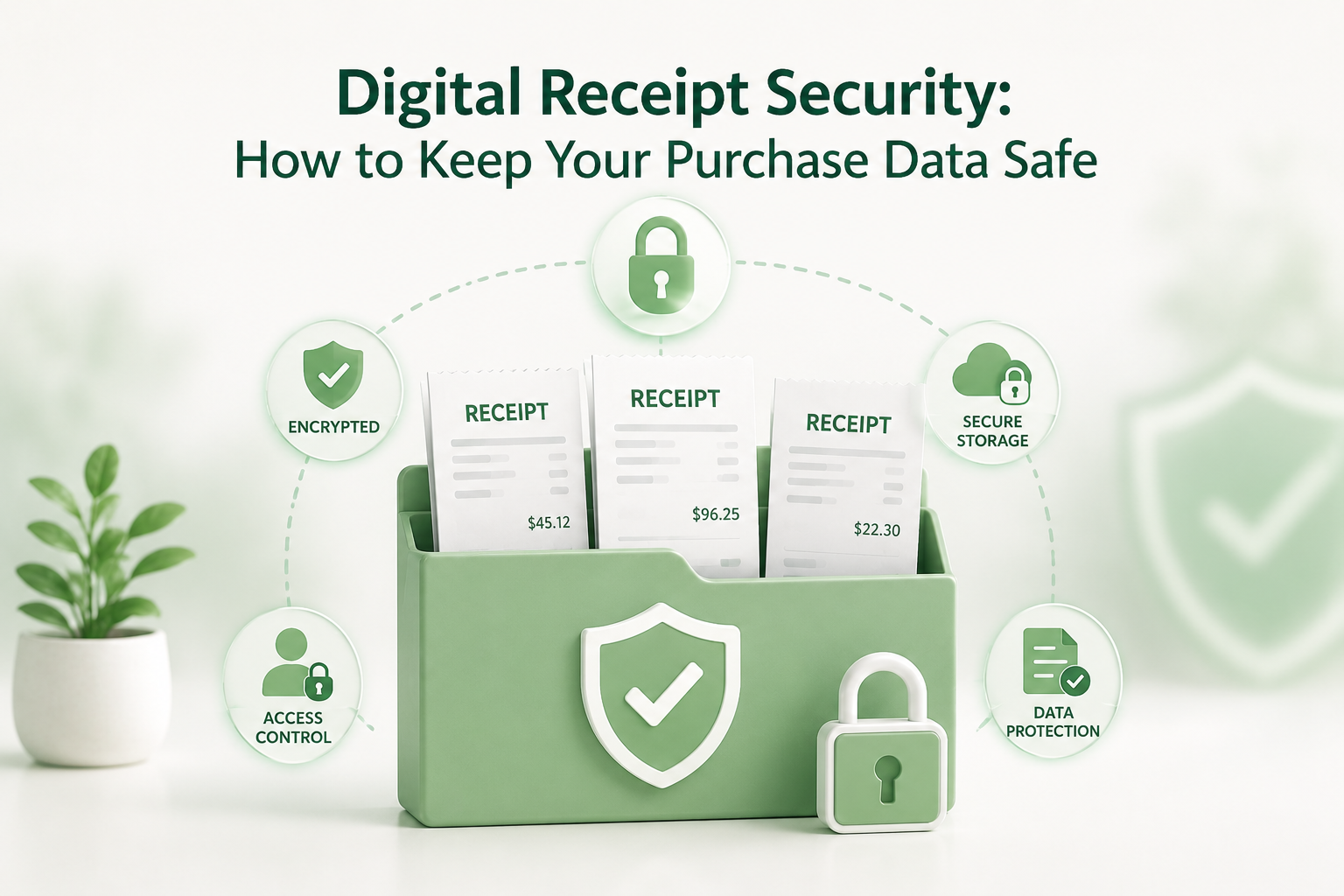
When you choose to receive a digital receipt after making a purchase, you give the store more than simply your email address. You give the store your full name and purchase history. You also give the store your location, or in the case of an online purchase, the location to which the items will be shipped. Many people may not think about the effect that a digital receipt may have on their security, but a person's history of digital receipts illustrates a lot to other people about that person.
Digital receipt storage is used by nearly every person who makes a purchase. Therefore, it is more important than ever to consider how that data is stored, who is given access to that data, and how that data may be kept secure. This guide will identify the risks associated with digital receipts, what your digital receipts reveal about you, and provide you with the criteria necessary to determine if a receipt management system is secure to use.
What Information Do Your Digital Receipts Actually Contain?
It is easy to think of a receipt as just a record of what you bought. But a digital receipt contains a lot more than a list of items and a total.
The buyer's electronic receipt may include a description of every item that was purchased, the name of the store, the location of the store, the payment information that was used to purchase the items, the time and date of the purchase, the buyer's shipping address, the buyer's IP address and the type of device that was used to make the purchase. You may also find the buyer's full name and email address.
Put enough of those receipts together, and you have a detailed picture of someone's life, where they shop, what they eat, what they buy for their health, their home, and their children. That is why how your digital receipts are stored and who can access them genuinely matters.
The Real Risks of Poor Digital Receipt Storage
Most people assume their purchase records are private by default. In many cases, they are not.
Your inbox is not a secure receipt vault
The most common place people store digital receipts is their email inbox. The problem is that Email accounts are a common target for phishing attempts and account compromise. If your inbox is compromised, so is your entire purchase history. Using a dedicated receipt management app keeps your receipt data separate from your general email, reducing your exposure significantly.
Free apps may cost you more than you think
Not every receipt organizer or expense tracking tool is built with your privacy as the priority. Some free platforms generate revenue by using your purchase data in ways that are explained deep in their terms of service in a language most people never read. Before uploading your receipts to any platform, it is worth asking: What does this business actually do with my data?
Unsecured cloud storage leaves gaps
The convenience of storing receipts in a general camera roll or a cloud folder is far worse than what is offered by receipt storage software. A shelf cloud folder is likely to be structureless and may not even be private. Receipt storage software is built to address these issues.
Weak passwords and no two-factor authentication
Any account that holds financial records should have a strong, unique password and two-factor authentication enabled. Without them, one stolen password is all it takes for someone else to access years of your purchase history.
What Encryption Actually Means for Your Receipt Data
Encryption gets mentioned a lot in data security conversations, but most explanations assume you already know what it means. Here is a plain-English version.
Encryption converts your data into a scrambled format that cannot be read without the correct key. Think of it as a lockbox: the contents are inside, but only someone with the right key can open it.
For digital receipt storage, there are two moments where encryption matters. The first is when your data is moving, being uploaded from your device to a server. The second is when your data is sitting still, stored on a server. Both need to be protected. A platform that secures one but not the other is only doing half the job.
When you are evaluating any receipt management platform, look for language about encrypted storage and secure data transmission. A platform that does not mention encryption anywhere in its security or privacy information is a platform that has not made it a priority.
5 Things to Look for in a Secure Receipt Management Platform
Whether you are choosing a receipt keeper for personal use or evaluating receipt management software for your household, these five things should be on your checklist.
• Encrypted storage: your receipts should be stored in a format that cannot be read by anyone without your credentials, including the platform itself
• A clear, readable privacy policy: specifically look for whether the platform sells or shares your data with third parties or advertising partners. If the policy is vague or difficult to find, that is a warning sign.
• Two-factor authentication: any platform that stores financial records should give you the option to secure your account with a second layer of verification beyond just a password
• No data monetisation: if a receipt organizer is free, find out how it makes money. Platforms that respect your data will have a clear, straightforward business model that does not rely on selling user purchase history
• Account control and data deletion: a trustworthy platform lets you export your receipts and permanently delete your account and all associated data if you choose to leave
Best Practices for Keeping Your Receipt Data Safe
Beyond choosing the right platform, there are habits that make a real difference to how secure your digital receipt data stays over time.
Use a dedicated receipt management app rather than your general inbox. Your inbox is connected to too many other services and is too high-value a target. A purpose-built platform for managing receipts keeps your purchase data in one organised, secure place.
Use a strong, unique password for any account that holds financial records. Password reuse is one of the most common reasons accounts get compromised. If one platform is breached, attackers try the same credentials everywhere.
Enable two-factor authentication wherever it is available. This single step makes it dramatically harder for anyone to access your account, even if they have your password.
Periodically review and delete receipts you no longer need. Old receipts from returned items, expired warranties, or one-time purchases do not need to live in your account forever. Less stored data means less exposed data.
Be cautious about receipt apps that request more permissions than they need. A receipt organizer does not need access to your contacts, microphone, or location to do its job.
How AMRIOP Handles Your Digital Receipt Data
AMRIOP — which stands for All My Receipts In One Place — is built around one simple idea: your receipts belong to you, and they should be organised, accessible, and private.
Your receipts are stored under your credentials only. AMRIOP is designed to keep your receipt data private and is not built around selling users' purchase history. There is no advertising model built on top of your purchase history. Your receipt data is yours.
The platform uses industry-standard security measures designed to help protect receipt data. You can organise receipts into folders, tag them by category, filter by store or location, and build a full purchase history that is always there when you need it, for a warranty claim, a return, or just to check what you spent last month.
AMRIOP supports paperless receipts from both in-store and online purchases, and connects directly with your Gmail or Outlook inbox to capture eReceipts automatically — so your digital receipt tracking stays current without any manual effort. See how it works here.
Frequently Asked Questions
Is storing receipts digitally safe?
Yes. Digital receipts can generally be safely stored in a receipt management app and, if you utilise a platform with encrypted storage, a transparent privacy policy, and no monetization of your data, they are safe. Paper receipts are lost, fade, and cannot be recovered when gone. Digital receipts are much more secure and less susceptible to being lost or faded.
What information does a digital receipt hold?
A digital receipt can have your name and email, the name and location of the seller, the time and date of the purchase, the purchased items, and the total amount. Digital receipts can sometimes have payment card information. Digital receipts with online orders can have your shipping address and the information of your device.
Can the digital receipt platform sell my data?
It is possible. This is especially the case with free tools that sell your information to advertising companies as an aggregated or anonymized set of your purchases. Before you upload your receipt to a platform, you should thoroughly examine its privacy policy for third-party data sharing.
What do I look for when trying to select a secure receipt storage platform?
Encrypted storage, straightforward privacy policies that do not sell data, two-factor authentication, and account control that allow you to delete your data are some of the things you should look for when trying to select a secure receipt storage platform. If your platform conforms to these features, these features can help improve the security and control of your purchasing history. .
Do digital receipts provide better privacy than paper receipts?
In most cases, I would say yes. Aside from paper receipts, which often contain the same confidential information, they are easier to lose, harder to replace when destroyed, and often degrade within a short amount of time. Digital receipts, when kept in a relatively secure space, allow you to control and manage your data in ways a paper receipt will never allow you to.
DISCLAIMER:
Users should review AMRIOP's Privacy Policy and Terms of Service for complete information about data handling, integrations, retention practices, and account security. This article is intended for general informational purposes only and does not constitute legal, financial, or technical advice. For guidance specific to your situation, consult a qualified professional.
Related Blogs
View all the related blogs from here
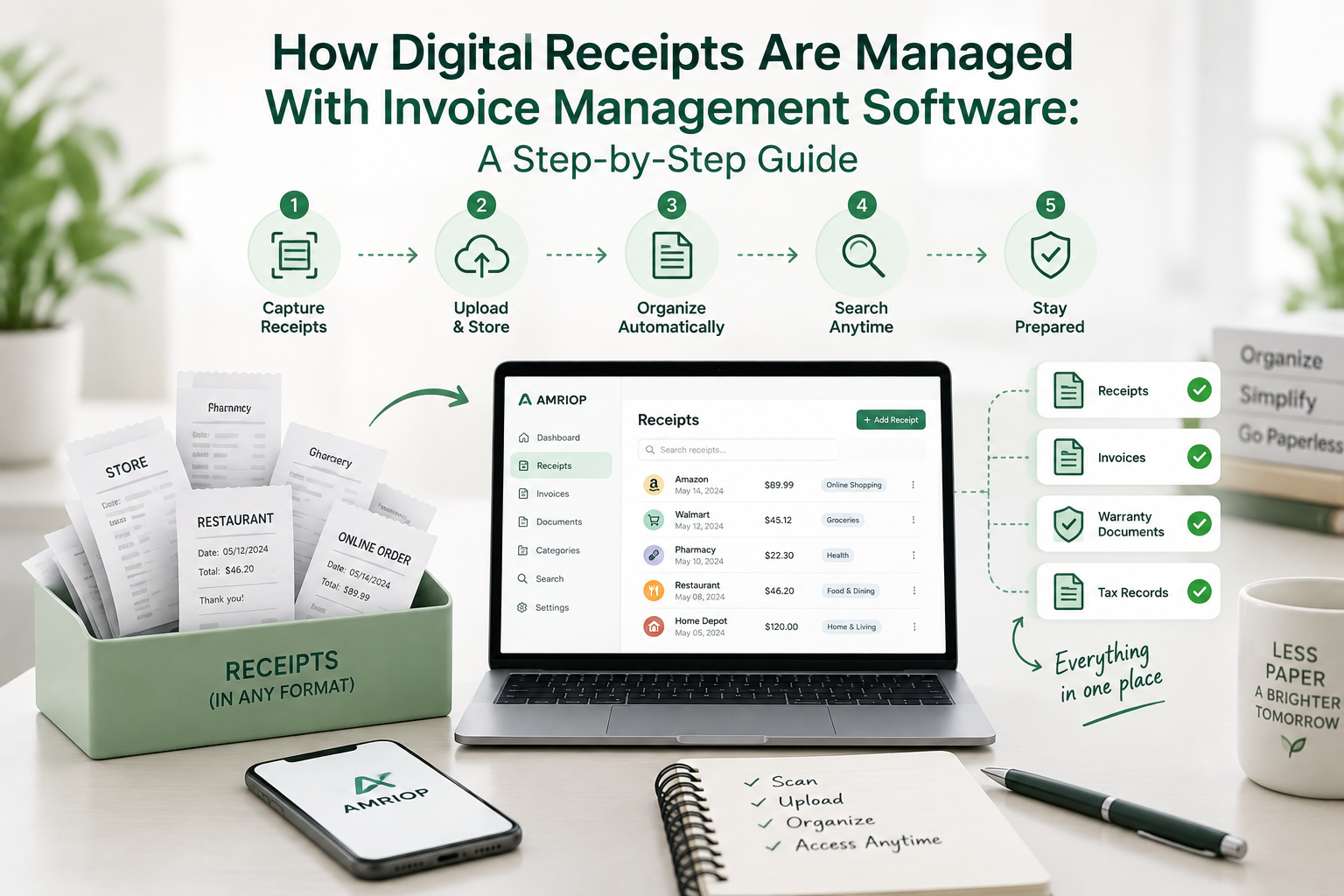
How Digital Receipts Are Managed With Invoice Management Software: A...
Learn how digital receipts are managed with invoice management software, from capturing and organizing receipts to automating storage and improving record keepi...
 Uploaded on 17 Sep 2026
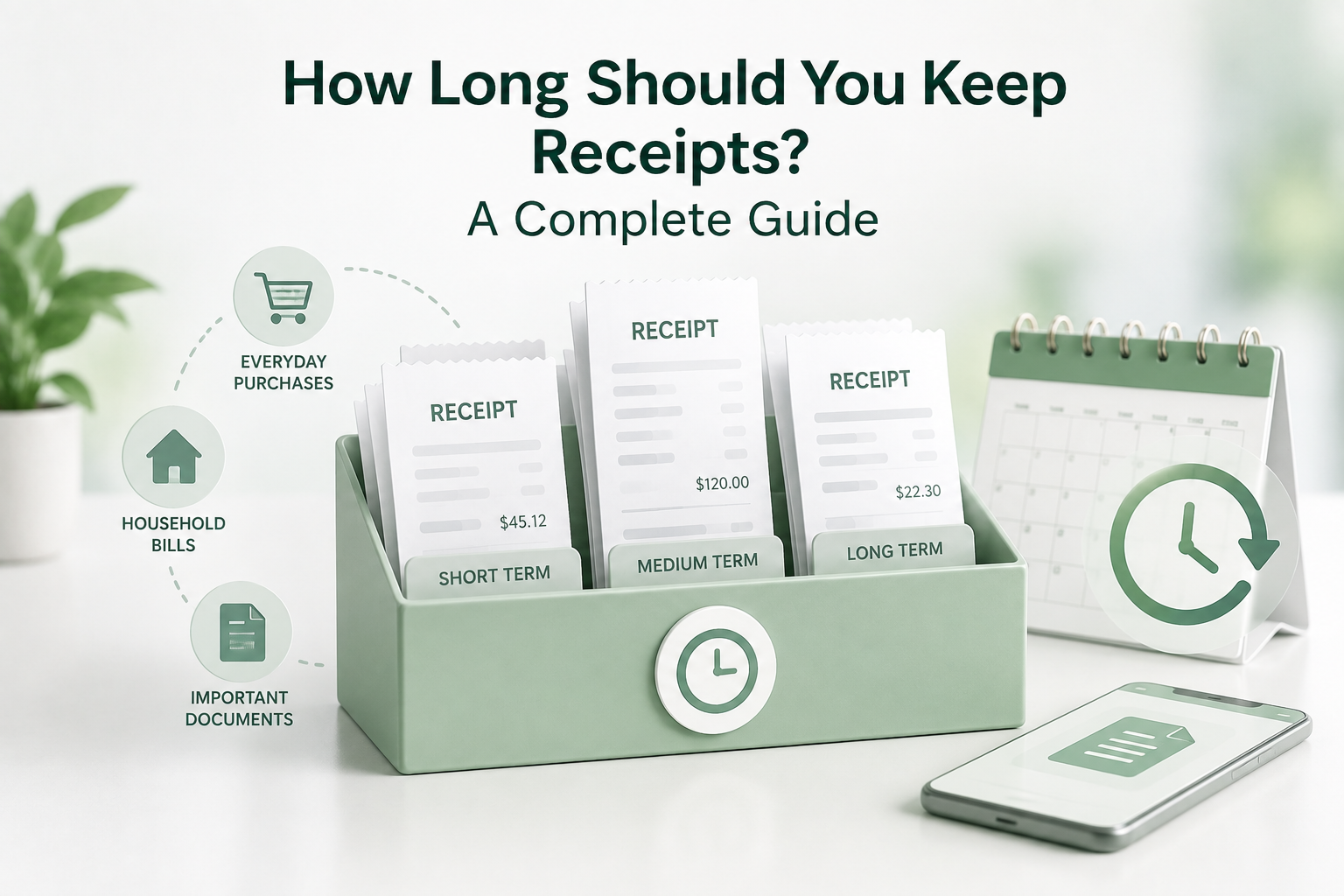
How Long Should You Keep Receipts? A Complete Guide
Learn how long to keep receipts for taxes, warranties, returns, and expenses, plus simple ways to store and organize important receipts digitally.
Uploaded on 10 Sep 2026
How to Claim a Product Warranty Without a Paper Receipt
Lost your receipt? Learn how to claim a product warranty using alternative proof of purchase and prevent receipt loss in the future.
Uploaded on 18 Jun 2026
Start Your Paperless Journey
At Amriop, we’re more than an invoice management software, we’re building a smarter, more sustainable way to handle digital receipts. Whether you want to manage eReceipts more efficiently, adopt electronic receipts to reduce waste, or use secure digital receipt storage, Amriop offers a receipt organizer and receipt management system designed for everyone.
Go Paperless Now